Retatrutide
Retatrutide is a “triple G” (GLP-1, GIP, glucagon) receptor agonist. The webinar discusses research into its potential for fat loss and metabolic health, including appetite, blood sugar control, liver fat and energy metabolism.

RECORDED WEBINAR WITH PHIL RICHARDS
Purchase the recording and watch straight away, at your own pace.
BUY & WATCH NOWThis webinar is for research and informational purposes only. It does not constitute medical advice. Always consult a qualified healthcare professional before making decisions related to your health.
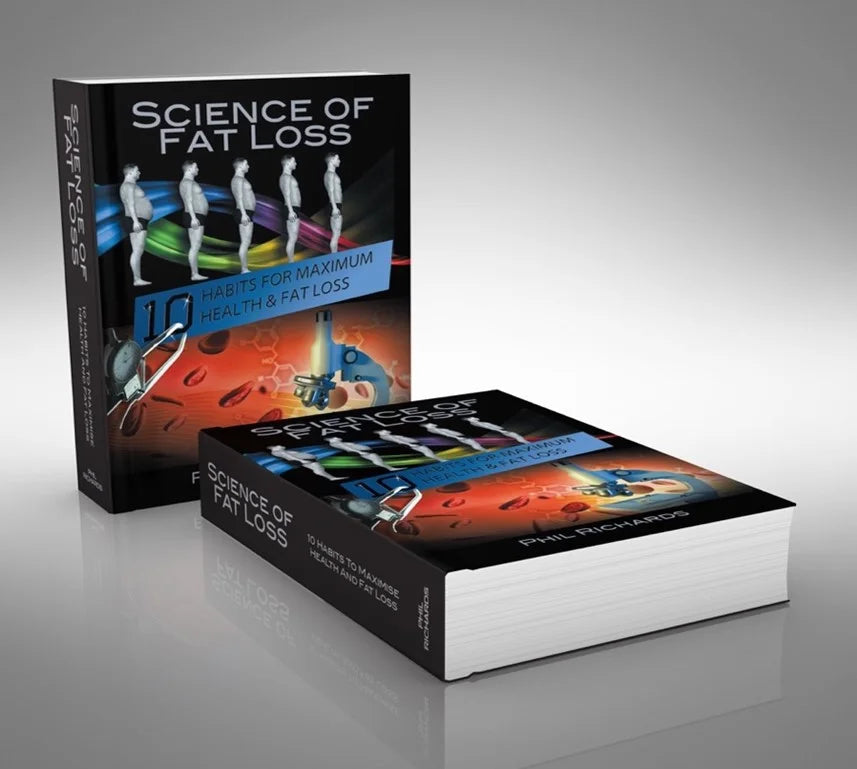
I (Phil) have personally been researching the science of fat loss for over 30 years and even wrote a 730-page book on the subject, which took over 10 years to gather all the information for. I also put together a 70-hour online course on everything you need to know about fat loss.
“Phil Richards Science Of Fat Loss Book is one of the best books I’ve read on the subject, and every trainer should read this book.”DR ERIC SERRANO · HORMONAL EXPERT
My primary role when I worked in professional sport as a high-performance coach was to get players as lean, strong and fit as I possibly could so they could perform at a higher level. I did this for several years and in multiple sports, all at the highest level.
Below are just some of the athletes and teams I have worked with in the past.

My personal battle against obesity started in 1988 when I was 21 years of age. At that time, I was an elite endurance athlete weighing 56 kg. I stopped competing on the bike and running and started lifting weights. Within two years, my weight had increased to 105 kg — a gain of 49 kg — and I have struggled with my weight ever since.
I share my personal experience of training, dieting and introducing peptides into my regime at the age of 59. The pictures below show my transformation after 26 weeks: 25 kg lighter, from 105 kg to 80 kg, with a target weight of 75 kg.

My wife Wenda’s transformation, also at the age of 59, has been incredible. She started her peptide journey on the same day as me. As a menopausal woman she had gained weight without changing her diet or exercise regime. The pictures below show her personal transformation over 26 weeks, from 71 kg to 56 kg.

I want to emphasise that I ran comprehensive lab testing for both myself and Wenda. Our individual results informed our different approaches. Lab testing also helps identify underlying health issues that need attention, rather than blindly taking peptides.
Personal experiences and results vary. These examples are not a guarantee of results.
For fat loss to occur, Phil’s approach focuses on three things: decreasing appetite, mobilising stored fat and then burning the fat. In this webinar he discusses the following peptides and related research compounds.
Retatrutide is a “triple G” (GLP-1, GIP, glucagon) receptor agonist. The webinar discusses research into its potential for fat loss and metabolic health, including appetite, blood sugar control, liver fat and energy metabolism.
Cagrilintide is a synthetic, long-acting amylin analogue developed by Novo Nordisk as a potential treatment for obesity and related metabolic conditions. The webinar explores amylin signalling, food intake, blood sugar, gastric emptying and satiety.
Adipotide, also known as FTPP (Fat-Targeted Proapoptotic Peptide), is a synthetic research peptide developed to act on the blood vessels that nourish fat cells. Phil discusses this vascular mechanism and how it differs from approaches centred on appetite or metabolism.
Tesamorelin is a growth-hormone-releasing analogue originally developed as a medical therapy for visceral fat accumulation in people with HIV. The webinar discusses its background and the research around visceral fat and body composition.
CJC-1295 is a growth-hormone-releasing hormone (GHRH) analogue, while ipamorelin is a selective ghrelin receptor agonist. Phil discusses growth hormone signalling, the rationale for combining them and the research relating to fat metabolism and body composition.
AOD9604 is a peptide derived from the C-terminal fragment of human growth hormone. This part of the webinar looks at research into lipolysis — the breakdown of fats into free fatty acids — and lipogenesis, the formation of new fat deposits.
MOTS-c is a mitochondrial-derived peptide studied for its potential role in metabolic regulation, insulin sensitivity and ageing-related disease. Phil discusses skeletal muscle, glucose metabolism and findings from animal studies.
SS-31 is a mitochondria-targeted peptide that interacts with the inner mitochondrial membrane. The webinar discusses mitochondrial function, ATP production and the role of cellular energy in metabolism.
SLU-PP-332 is a research small molecule, rather than a peptide. It was developed through research into oestrogen-related receptors, including ERR alpha, beta and gamma. Phil discusses the metabolic pathways associated with aerobic exercise and the compound’s research background.
5-Amino-1-methylquinolinium (5-Amino-1MQ) is a small-molecule inhibitor of nicotinamide N-methyltransferase (NNMT). The webinar discusses NNMT in relation to metabolic regulation, fat storage, mitochondrial function and cellular energy balance.
BAM15 is a synthetic small molecule, rather than a peptide. Phil discusses laboratory animal research into mitochondrial energy use, fat mass and lean muscle preservation, including research from the Pennington Biomedical Research Center.
Join Phil for an in-depth webinar about fat loss, bringing together the research and his experience to explore internal signalling, appetite, metabolism and body composition. Purchase the recording and start watching straight away, at your own pace.
BUY & WATCH THE RECORDING£47 · Watch straight away after purchase
The purchase link will be added here soon.